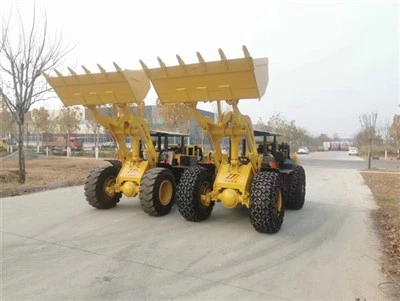
Yo, folks! I'm here as a supplier of Autonomous Dump Trucks. And today, we're diving into a crucial topic: how these self - driving beasts handle mechanical failures.
Let's first understand what makes autonomous dump trucks so special. These bad boys are like the future of mining and heavy - hauling industries. They operate 24/7, navigating tough terrains and hauling tons of materials without a human driver at the wheel. But like any machine, they can run into problems from time to time.
One of the main things that can go wrong with autonomous dump trucks is mechanical failures. Think stuff like engine troubles, brake issues, or problems with the hydraulic systems. When these happen, it's not just a minor inconvenience; it can lead to major disruptions in work operations, significant financial losses, and even pose safety risks.


So, how do we deal with it? Well, autonomous dump trucks come equipped with some seriously high - tech monitoring systems. These sensors are constantly keeping an eye on all the key components of the truck. They're like little detectives inside the machine, looking for any signs of trouble.
For example, in the engine, sensors can monitor things like temperature, oil pressure, and fuel flow. If the engine temperature starts to rise too high, the system instantly knows something's up. It can alert the control center right away. And what's the control center? It's a group of really smart operators sitting in a safe and comfortable place, who are always ready to take action when something goes wrong.
Once the control center gets the signal about the mechanical failure, they have a few options. First off, if the problem isn't too serious, they might just slow the truck down. This is a smart move as it allows the truck to keep going, but at a safer pace, until it reaches a maintenance area. It's like giving the truck a time - out to cool off and get checked out.
But if the problem is severe, like a major brake failure, the control center can instruct the truck to stop immediately. Safety is always the top priority, and an out - of - control dump truck is a recipe for disaster. When the truck stops, it parks itself in a safe location, away from traffic and other hazards.
Now, what happens after the truck has stopped? A maintenance crew is quickly dispatched to the scene. They're like the superheroes of the operation, armed with all the tools and knowledge to fix whatever's broken. They use diagnostic tools to figure out exactly what's wrong. These tools can read the data from the truck's sensors and give the mechanics a clear picture of the problem.
Let's talk about some specific types of mechanical failures. Engine failures are a big one. An engine is the heart of the dump truck, and if it stops working, the whole thing comes to a halt. When an engine failure is detected, the control center will usually shut down the engine to prevent further damage. The maintenance crew will then come in and check things like the fuel injection system, the ignition system, and the cooling system. They might need to replace parts like spark plugs, fuel filters, or water pumps.
Brake failures are also extremely dangerous. Autonomous dump trucks have multiple levels of braking systems for safety. There are the primary brakes, which are used for normal stopping, and secondary brakes, which act as a backup. If the primary brakes fail, the secondary brakes kick in automatically. But even with these backup systems, the control center will still stop the truck right away. The maintenance crew will then inspect the brake pads, discs, and hydraulic lines to find out what caused the problem.
Hydraulic system failures can mess up the truck's ability to lift and dump loads. The hydraulic system is responsible for raising the dump body, and if it fails, the truck can't do its main job. When a hydraulic failure is detected, the control center will stop any ongoing lifting operations. The maintenance crew will check the hydraulic pumps, hoses, and cylinders to see if there are any leaks or malfunctions.
We've also made sure that our autonomous dump trucks are built tough. They're designed to withstand the harsh conditions of mining sites and heavy - duty hauling. But even the toughest machines need some TLC. Regular maintenance checks are crucial to catching potential problems before they turn into full - blown failures.
For example, we recommend that our customers have their dump trucks inspected at least once a month. During these inspections, the maintenance crew will look at all the components, clean them, and replace any parts that are showing signs of wear and tear. It's like taking your car for a regular check - up at the mechanic, but on a much larger scale.
Another important aspect is the software. The autonomous operating system of these dump trucks is constantly updated. These updates not only improve the truck's performance but also include patches to fix any issues that could lead to mechanical failures. For instance, a software update might improve the way the sensors communicate with the control center, making it easier to detect problems early.
Now, let me tell you about some of the amazing vehicles we offer. We've got Mining Drive Vehicle, which is perfect for all sorts of mining operations. It's got a powerful engine and a robust frame to handle the heavy loads and rough terrains.
Then there's the 60 Tons Wide Body Dump Truck. With its wide body design, it can carry more materials in one go, increasing efficiency at the job site.
And of course, we also have the Mechanical Transport Vehicle, which is a reliable workhorse for transporting heavy equipment and materials.
If you're in the market for high - quality autonomous dump trucks, look no further. We've got the experience, the technology, and the support to ensure that your operations run smoothly. Whether you're a small - scale mining company or a large - scale construction firm, our vehicles can meet your needs. Reach out to us for procurement and let's start a great business relationship. We're here to help you get the most out of your investment in autonomous dump trucks.
References
- "Automotive Technology: A Systems Approach" by James D. Halderman
- "Handbook of Mining Engineering" by Paul A. Walton