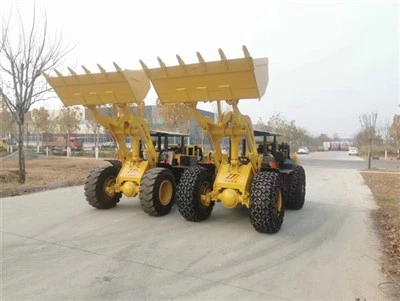
Hey there! As a supplier of explosion - proof loaders, I often get asked how the steering system of these bad boys works. So, let's dive right into it.
First off, you gotta understand the importance of a reliable steering system in an explosion - proof loader. These machines are used in some of the most hazardous environments, like mines. A malfunctioning steering system can lead to all sorts of disasters, from minor collisions to major accidents that could put the lives of workers at risk.
The basic principle behind the steering system of an explosion - proof loader is similar to that of a regular vehicle, but with a lot more safety features built in. It's all about controlling the direction of the wheels to move the loader where you want it to go.
Components of the Steering System
Steering Wheel
Just like in your car, the steering wheel is the starting point of the steering process. When you turn the steering wheel, you're initiating a series of actions that will ultimately change the direction of the loader. It's connected to a steering shaft, which transfers your input to the rest of the system.
Steering Gearbox
The steering gearbox is a crucial part of the system. It takes the relatively small rotational force you apply to the steering wheel and amplifies it. This amplified force is then used to move the steering linkage and turn the wheels. There are different types of steering gearboxes, but the most common ones in explosion - proof loaders are the recirculating ball and rack - and - pinion types.
The recirculating ball gearbox has a worm gear inside. As the steering shaft turns, the worm gear rotates, causing a nut to move along it. The nut is connected to the steering linkage, and its movement turns the wheels. This type of gearbox is known for its durability and ability to handle high loads, which is perfect for heavy - duty explosion - proof loaders.
On the other hand, the rack - and - pinion gearbox is simpler and more compact. The steering shaft turns a pinion gear, which meshes with a rack. As the pinion rotates, it moves the rack left or right, and this movement is transferred to the wheels. Rack - and - pinion systems are often used in smaller explosion - proof loaders because they offer better steering feel and are more efficient.
Steering Linkage
The steering linkage consists of a series of rods and joints that connect the steering gearbox to the wheels. It's responsible for transmitting the movement from the gearbox to the wheels in a way that allows them to turn smoothly and in the right direction. The most common type of steering linkage in a loader is the parallelogram linkage.
In a parallelogram linkage, two parallel rods are connected to the steering knuckles on the wheels. When the steering gearbox moves the linkage, the parallel rods keep the wheels at the same angle, ensuring straight and coordinated turning. This type of linkage is very stable and provides precise steering control.
Power Steering System
Most explosion - proof loaders are equipped with a power steering system. This makes it easier for the operator to turn the steering wheel, especially when the loader is stationary or moving at low speeds. The power steering system uses hydraulic or electric power to assist the operator's steering input.
In a hydraulic power steering system, a pump driven by the loader's engine pressurizes hydraulic fluid. This pressurized fluid is then directed to a power steering cylinder, which is connected to the steering linkage. When the operator turns the steering wheel, valves in the system control the flow of hydraulic fluid to the cylinder, causing it to move and assist in turning the wheels.
Electric power steering systems, on the other hand, use an electric motor to provide the steering assistance. These systems are more efficient and require less maintenance than hydraulic systems. They can also be programmed to adjust the steering assistance based on the speed of the loader, providing better steering feel at different speeds.

Safety Features in the Steering System of Explosion - proof Loaders
Explosion - proof Design
As the name suggests, explosion - proof loaders are designed to operate in explosive environments. The steering system is no exception. All the electrical components in the steering system, such as sensors and electric motors (if it's an electric power steering system), are enclosed in explosion - proof housings. These housings are designed to prevent any sparks or flames from escaping and causing an explosion.
Redundancy
To ensure the safety of the loader and its operator, the steering system often has redundancy built in. This means that if one part of the system fails, there is a backup mechanism that can still provide some level of steering control. For example, in a hydraulic power steering system, there might be a manual override that allows the operator to steer the loader using only mechanical means in case the hydraulic system fails.
Fail - safe Mechanisms
Fail - safe mechanisms are also an important part of the steering system. These mechanisms are designed to detect any faults in the system and take appropriate action. For example, if the power steering system loses pressure, a fail - safe valve might close to prevent the wheels from locking up suddenly. This allows the operator to safely bring the loader to a stop.
Importance in the Mining Industry
In the mining industry, explosion - proof loaders play a vital role. They are used for a variety of tasks, such as loading and transporting materials in coal mines. A well - functioning steering system is essential for the efficient operation of these loaders.
For example, in a coal mine, an explosion - proof loader needs to be able to navigate through narrow passages and tight spaces. The precise steering control provided by the steering system allows the operator to maneuver the loader safely and quickly. This not only improves productivity but also reduces the risk of accidents.
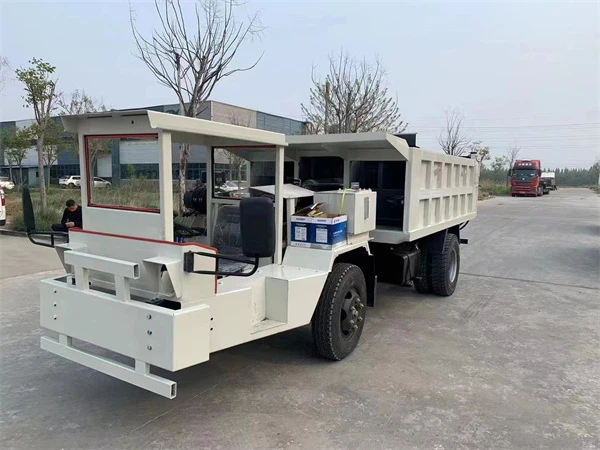
If you're in the mining business, you might also be interested in some of our other products. We offer a range of coal - mining engineering machinery, including Mine Explosion - proof Loader, Trackless Rubber Wheel Shuttletram, Mine Wide Body Vehicle, Mining Dump Truck, and Explosion - proof Trackless Rubber Wheel Vehicle.
Conclusion
So, there you have it! That's how the steering system of an explosion - proof loader works. It's a complex system that combines mechanical, hydraulic, and electrical components to provide safe and efficient steering control in dangerous environments.
If you're interested in purchasing an explosion - proof loader or any of our other mining equipment, don't hesitate to reach out. We're always ready to discuss your needs and find the best solution for your business.
References
- "Design and Analysis of Steering Systems in Heavy - Duty Vehicles", Journal of Automotive Engineering
- "Safety Standards for Explosion - proof Equipment in Mining", Mining Safety Handbook