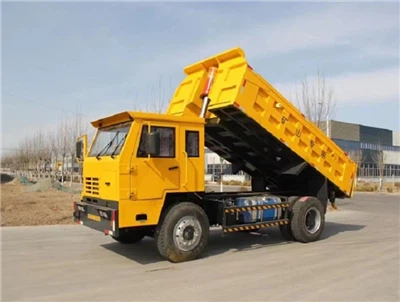
As a supplier of big trucks for mining, I often get asked about how often these beasts of the industry should be serviced. It's a crucial question, and the answer isn't as straightforward as you might think. In this blog, I'll break down the factors that determine the service intervals for mining trucks and give you a clearer picture of what to expect.
Understanding the Basics of Mining Trucks
First off, let's talk a bit about what makes mining trucks so different from your average road vehicle. These trucks are built to handle some of the toughest conditions on the planet. They're used in mines, where they're constantly exposed to dirt, dust, extreme temperatures, and heavy loads. Whether it's a Mining Concrete Mixer Truck or a Concrete Mixer Truck For Mining, these vehicles are the workhorses of the mining industry.
Mining trucks come in all shapes and sizes, but they generally have a few things in common. They're huge, with powerful engines and heavy-duty transmissions. They also have specialized suspension systems to handle the rough terrain, and large tires that can withstand the weight of the load. All these components need to be properly maintained to ensure the truck runs smoothly and safely.
Factors Affecting Service Intervals
So, how often should a big truck for mining be serviced? Well, it depends on several factors. Let's take a look at some of the most important ones.
Usage
The amount of use a truck gets is one of the biggest factors in determining its service intervals. If a truck is used constantly, it will need to be serviced more often than one that's used less frequently. For example, a truck that's used for 24 hours a day, 7 days a week will need more frequent maintenance than one that's only used a few hours a day.
In a busy mine, trucks are often running non-stop, hauling loads of ore or other materials. This puts a lot of stress on the engine, transmission, and other components. As a result, these trucks may need to be serviced every few hundred hours of operation. On the other hand, a truck that's used for occasional jobs may only need to be serviced once or twice a year.
Operating Conditions
The operating conditions also play a big role in determining service intervals. Mines can be extremely harsh environments, with high temperatures, dust, and humidity. These conditions can cause wear and tear on the truck's components, leading to more frequent breakdowns.
For example, if a truck is operating in a dusty mine, the air filters will need to be changed more often to prevent dirt from getting into the engine. Similarly, if the truck is operating in a hot climate, the coolant system will need to be checked regularly to make sure it's working properly. In general, trucks that operate in more extreme conditions will need to be serviced more often than those that operate in more moderate conditions.
Manufacturer Recommendations
Another important factor to consider is the manufacturer's recommendations. Each truck manufacturer has its own set of guidelines for how often the truck should be serviced. These guidelines are based on extensive testing and research, and they take into account the specific design and components of the truck.
It's important to follow the manufacturer's recommendations as closely as possible. Ignoring these guidelines can void the warranty and lead to premature wear and tear on the truck's components. You can usually find the manufacturer's service recommendations in the owner's manual or on the manufacturer's website.
Type of Truck
The type of truck also affects the service intervals. Different types of trucks have different components and systems, which require different levels of maintenance. For example, a Swift Transportation Mining Trucks may have a different service schedule than a mining concrete mixer truck.
Trucks with more complex systems, such as those with advanced emissions control systems or electronic controls, may require more frequent maintenance. On the other hand, trucks with simpler systems may be able to go longer between services.
General Service Intervals
While the service intervals for mining trucks can vary widely depending on the factors mentioned above, there are some general guidelines that can give you an idea of what to expect.
Engine Oil Changes
Engine oil is the lifeblood of the engine, and it needs to be changed regularly to keep the engine running smoothly. Most manufacturers recommend changing the engine oil every 250 to 500 hours of operation, depending on the type of engine and the operating conditions.
Filter Replacements
Air filters, fuel filters, and oil filters need to be replaced regularly to prevent dirt and debris from getting into the engine and other components. The frequency of filter replacements depends on the operating conditions, but in general, air filters should be replaced every 100 to 200 hours of operation, fuel filters every 250 to 500 hours, and oil filters every 250 to 500 hours.
Tire Inspections and Rotations
Tires are one of the most important components of a mining truck, and they need to be inspected and rotated regularly to ensure even wear. Tires should be inspected for damage and wear at least once a week, and they should be rotated every 500 to 1,000 hours of operation.
Brake Inspections
Brakes are another critical component of a mining truck, and they need to be inspected regularly to ensure they're working properly. Brake inspections should be done at least once a month, and the brake pads and rotors should be replaced as needed.
Transmission and Differential Service
The transmission and differential are responsible for transferring power from the engine to the wheels, and they need to be serviced regularly to ensure smooth operation. Most manufacturers recommend servicing the transmission and differential every 1,000 to 2,000 hours of operation.
Importance of Regular Maintenance
Regular maintenance is essential for keeping a big truck for mining running smoothly and safely. By following the recommended service intervals, you can prevent breakdowns, extend the life of the truck, and reduce the risk of accidents.
A well-maintained truck is also more fuel-efficient, which can save you money in the long run. When the engine is running smoothly and the components are properly lubricated, the truck uses less fuel to operate. This not only saves you money on fuel costs but also reduces your carbon footprint.
In addition to the cost savings and safety benefits, regular maintenance can also help you avoid costly repairs. By catching small problems early, you can prevent them from turning into major issues that require expensive parts and labor.
Conclusion
So, how often should a big truck for mining be serviced? The answer depends on several factors, including usage, operating conditions, manufacturer recommendations, and the type of truck. By taking these factors into account and following the recommended service intervals, you can ensure that your mining truck runs smoothly and safely for years to come.
If you're in the market for a big truck for mining or need help with maintenance and servicing, don't hesitate to reach out. We're here to provide you with the best trucks and support in the industry. Let's start a conversation about your mining truck needs and find the perfect solution for you.


References
- Various mining truck manufacturer manuals
- Industry research on mining truck maintenance practices