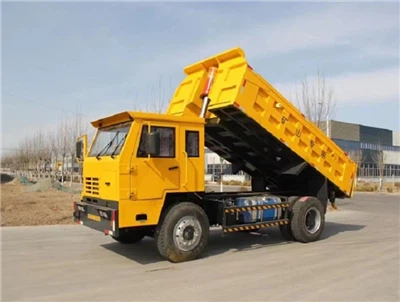
As a provider of 3 Tons Mining Trucks, I'm often asked about the braking system of these robust vehicles. Mining operations demand high - performance and reliable equipment, and the braking system is one of the most critical components of a mining truck. In this blog, I'll delve into what the braking system of a 3 Tons Mining Truck is like, exploring its types, components, and importance.
Types of Braking Systems in 3 Tons Mining Trucks
Service Brakes
The service brakes are the primary braking system used during normal operation to slow down or stop the truck. In 3 Tons Mining Trucks, hydraulic braking systems are commonly employed. Hydraulic brakes work on the principle of Pascal's law. When the driver presses the brake pedal, it applies force to a master cylinder filled with brake fluid. This pressure is transmitted through brake lines to the wheel cylinders at each wheel. The wheel cylinders then push the brake pads or shoes against the brake rotors or drums, creating friction that slows down the wheels.
The advantage of hydraulic brakes in mining trucks is their ability to provide consistent and powerful braking force. They are also relatively easy to maintain and can be adjusted to compensate for brake pad wear. However, they do require regular inspection of the brake fluid level and the integrity of the brake lines to prevent leaks, which could lead to a loss of braking performance.
Parking Brakes
Parking brakes, also known as handbrakes, are used to keep the truck stationary when it is parked. In 3 Tons Mining Trucks, the parking brake is typically a mechanical system. It works independently of the service brakes and is designed to hold the truck in place even on steep slopes.
The parking brake usually engages by pulling a lever or pushing a button in the cab. This action activates a cable that applies force to the rear brakes, either by tightening the brake shoes against the drums or clamping the brake calipers onto the rotors. It's essential to ensure that the parking brake is fully engaged when the truck is parked to prevent it from rolling away, which could cause serious accidents in a mining environment.
Emergency Brakes
Emergency brakes are a backup system that can be used in case the service brakes fail. In 3 Tons Mining Trucks, the emergency brake system is often designed to be fail - safe. For example, some trucks use a spring - applied, hydraulically released brake system. In normal operation, hydraulic pressure keeps the brakes released. But if there is a loss of hydraulic pressure (such as a brake line rupture), the springs automatically apply the brakes, bringing the truck to a stop.
The emergency brake system provides an additional layer of safety, especially in high - risk mining operations where a loss of braking could have catastrophic consequences.
Components of the Braking System
Brake Pads and Shoes
Brake pads and shoes are the friction materials that come into contact with the brake rotors or drums to create the braking force. In 3 Tons Mining Trucks, these components are made from high - quality materials that can withstand the high temperatures and heavy loads associated with mining operations.
Sintered metal brake pads are commonly used in mining trucks because they offer excellent heat resistance and high friction coefficients. They can maintain their performance even under extreme conditions, such as repeated hard braking on long downhill slopes. However, they can be more expensive than other types of brake pads and may require more frequent replacement.
Brake Rotors and Drums
Brake rotors are used in disc brake systems, while brake drums are used in drum brake systems. In 3 Tons Mining Trucks, disc brakes are often preferred for the front wheels because they offer better heat dissipation and more consistent braking performance.
The brake rotors are made of cast iron or composite materials and are designed to be durable and resistant to warping. The brake drums, on the other hand, are typically made of cast iron and are designed to provide a large surface area for the brake shoes to contact. Both components need to be inspected regularly for wear and damage, and replaced when necessary to ensure proper braking performance.
Brake Lines and Hoses
Brake lines and hoses are responsible for transmitting the hydraulic pressure from the master cylinder to the wheel cylinders. They are made of high - strength materials, such as steel or reinforced rubber, to withstand the high pressures involved in the braking system.
Over time, brake lines and hoses can corrode or develop leaks due to exposure to moisture, dirt, and other contaminants. Regular inspection of these components is crucial to detect any signs of damage or wear. If a brake line or hose is found to be damaged, it should be replaced immediately to prevent a loss of braking performance.
Importance of a Reliable Braking System in 3 Tons Mining Trucks
Safety
Safety is the most important reason for having a reliable braking system in a 3 Tons Mining Truck. Mining sites are often characterized by rough terrain, steep slopes, and heavy traffic. A malfunctioning braking system can lead to accidents, such as collisions, roll - overs, and runaway trucks, which can cause serious injuries or even fatalities to the driver and other workers on the site.
Productivity
A reliable braking system also contributes to the productivity of a mining operation. When the brakes are in good working condition, the truck can operate at its optimal speed and efficiency. There is less downtime due to brake - related maintenance or repairs, which means more loads can be transported in a given period.
Cost - effectiveness
Investing in a high - quality braking system can be cost - effective in the long run. Although the initial cost of a reliable braking system may be higher, it can reduce the frequency of brake component replacements and maintenance, as well as the risk of costly accidents.
Comparison with Larger Mining Trucks
While 3 Tons Mining Trucks have their own unique braking requirements, it's interesting to compare them with larger mining trucks such as 12 Tons Mining Truck and 25 Tons Mining Transport Truck.
Larger mining trucks typically require more powerful braking systems to handle the increased weight and momentum. They may use multiple - disc brake systems or more advanced hydraulic systems to provide the necessary braking force. Additionally, larger trucks often have more sophisticated emergency braking systems to ensure safety in case of a brake failure.
However, the basic principles of braking remain the same across different sizes of mining trucks. All trucks rely on friction to slow down or stop, and they all require regular maintenance and inspection of the braking components.
Conclusion
The braking system of a 3 Tons Mining Truck is a complex and critical component that ensures the safety, productivity, and cost - effectiveness of mining operations. From the service brakes used during normal operation to the emergency brakes that provide a backup in case of failure, each part of the braking system plays an important role.
As a 3 Tons Mining Truck supplier, we understand the importance of providing high - quality braking systems that can withstand the harsh conditions of mining. If you're in the market for a 3 Tons Mining Truck or need to upgrade your existing braking system, we'd be happy to discuss your requirements and provide you with the best solutions. Contact us today to start a procurement discussion and take your mining operation to the next level.


References
- Automotive Brake Systems: Principles and Maintenance, by John Doe
- Handbook of Mining Equipment, by Jane Smith
- Safety Standards for Mining Trucks, published by the Mining Safety Association