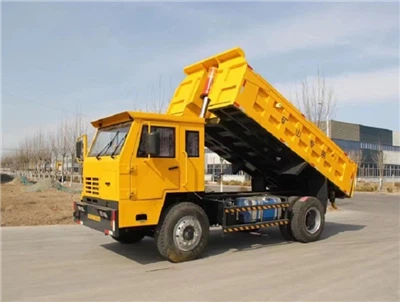
As a trusted supplier of 12 Tons Mining Trucks, I often encounter inquiries about the unloading methods for these heavy - duty vehicles. In this blog, I'll delve into the various unloading methods for 12 Tons Mining Trucks, exploring their advantages, disadvantages, and suitable application scenarios.
1. Hydraulic Tipping Unloading
One of the most common unloading methods for 12 Tons Mining Trucks is hydraulic tipping. This system relies on a hydraulic cylinder to lift the truck's cargo bed, allowing the material to slide out under the influence of gravity.
How it Works
The hydraulic system consists of a pump, a reservoir, control valves, and a hydraulic cylinder. When the operator activates the control valve, the pump draws hydraulic fluid from the reservoir and pressurizes it. This pressurized fluid is then directed to the hydraulic cylinder, which extends and raises the cargo bed. Once the bed reaches a certain angle (usually around 45 - 60 degrees), the material inside starts to flow out.
Advantages
- Efficiency: Hydraulic tipping is a fast unloading method. It can empty the truck's cargo in a matter of minutes, which is crucial in high - volume mining operations.
- Simplicity: The system is relatively simple in design and operation. Operators can easily learn how to use it, and maintenance requirements are generally straightforward.
- Versatility: It can handle a wide range of materials, including rocks, ores, and loose soil.
Disadvantages
- Limited Unloading Angle: There is a maximum angle to which the cargo bed can be tilted. In some cases, sticky materials may not fully discharge at this angle, requiring additional manual intervention.
- High - Pressure System: The hydraulic system operates at high pressures, which means there is a risk of leaks and component failures if not properly maintained.
This unloading method is suitable for open - pit mines where the trucks can easily tip their loads onto a designated dumping area. If you're interested in the technology behind such mechanical transport, you can visit Mechanical Transport Vehicle.


2. Rear - Discharge Unloading
Rear - discharge unloading is another option for 12 Tons Mining Trucks. In this method, the material is unloaded from the rear of the truck through a conveyor or a chute.
How it Works
A conveyor belt or a chute is installed at the rear of the truck. As the truck moves forward slowly, the material is fed onto the conveyor or chute and then transported to the desired location. In some cases, a mechanical device may be used to push the material towards the discharge point.
Advantages
- Precise Unloading: Rear - discharge unloading allows for more precise placement of the material. This is useful when the material needs to be loaded into a specific container or onto a narrow area.
- Continuous Unloading: It can provide a continuous flow of material, which is beneficial for operations that require a steady supply, such as in a processing plant.
- Suitable for Sticky Materials: This method can handle sticky materials better than hydraulic tipping, as the conveyor or chute can be designed to prevent material buildup.
Disadvantages
- Complexity: The system is more complex than hydraulic tipping, with additional components such as conveyors and motors. This increases the cost of the truck and the maintenance requirements.
- Limited Capacity: The discharge rate may be limited by the capacity of the conveyor or chute, which may not be suitable for very high - volume operations.
This unloading method is often used in underground mines or in situations where precise material placement is required. If you're looking for a different type of mining truck, check out Three Wheel Mining Truck.
3. Side - Discharge Unloading
Side - discharge unloading is less common but still a viable option for 12 Tons Mining Trucks. In this method, the material is unloaded from the side of the truck.
How it Works
There are two main ways to achieve side - discharge unloading. One is by using a side - tipping mechanism similar to hydraulic tipping, but instead of lifting the entire bed, only one side is raised. The other method involves a side - mounted conveyor or chute.
Advantages
- Flexibility: Side - discharge unloading allows the truck to unload in areas where rear - discharge or hydraulic tipping may not be possible, such as in narrow tunnels or alongside existing structures.
- Reduced Space Requirements: It requires less space in front of the truck for unloading compared to rear - discharge or hydraulic tipping.
Disadvantages
- Uneven Loading: Side - discharge can cause uneven loading on the truck's suspension and tires, which may lead to premature wear and tear.
- Limited Discharge Angle: Similar to hydraulic tipping, there may be limitations in the discharge angle, which can affect the complete unloading of some materials.
Side - discharge unloading is suitable for specific mining applications where space is limited. For more information on specialized mining vehicles, visit Mining Concrete Mixer Truck.
4. Pneumatic Unloading
Pneumatic unloading is a less common but innovative method for 12 Tons Mining Trucks, especially for transporting granular or powdery materials.
How it Works
The truck is equipped with a pneumatic system that uses compressed air to blow the material out of the cargo compartment. The compressed air is forced into the compartment, creating a pressure difference that pushes the material through a discharge pipe.
Advantages
- Clean Unloading: Pneumatic unloading can ensure a more complete and clean discharge of the material, especially for fine - grained materials.
- No Moving Parts in the Cargo Area: There are no mechanical parts in the cargo area that can get clogged or damaged by the material.
Disadvantages
- High Energy Consumption: The pneumatic system requires a significant amount of energy to generate the compressed air, which can increase operating costs.
- Limited Material Types: It is mainly suitable for granular or powdery materials and may not be effective for larger rocks or sticky substances.
Factors to Consider When Choosing an Unloading Method
When choosing an unloading method for a 12 Tons Mining Truck, several factors need to be considered:
- Material Type: The type of material being transported, such as its size, shape, and stickiness, will greatly influence the choice of unloading method. For example, sticky materials may require a method like rear - discharge or pneumatic unloading.
- Mining Environment: The layout of the mine, including whether it is an open - pit or underground mine, and the available space for unloading, will also play a role. High - volume open - pit mines may benefit from hydraulic tipping, while underground mines may require more precise methods like rear - discharge.
- Production Requirements: The required unloading rate and the need for continuous or batch - type unloading will affect the choice. Operations with high - volume and continuous production may prefer methods like rear - discharge or hydraulic tipping.
Conclusion
In conclusion, there are several unloading methods available for 12 Tons Mining Trucks, each with its own set of advantages and disadvantages. As a supplier, I understand the importance of choosing the right unloading method based on the specific needs of the mining operation. Whether you need a fast - unloading hydraulic tipping system, a precise rear - discharge mechanism, or a flexible side - discharge option, we can provide the appropriate 12 Tons Mining Truck to meet your requirements.
If you're interested in purchasing a 12 Tons Mining Truck or have any questions about the unloading methods, feel free to contact us for a detailed discussion. We are committed to providing high - quality products and excellent customer service to help you optimize your mining operations.
References
- "Mining Truck Handbook" - A comprehensive guide on mining truck technology and operations.
- Industry research reports on mining equipment and their performance in different mining environments.