Autonomous dump trucks have emerged as a revolutionary technology in the field of transportation and construction. As a supplier of autonomous dump trucks, I've witnessed firsthand the growing interest in their potential applications, especially in urban construction projects. In this blog, I'll explore whether autonomous dump trucks can be effectively used in urban construction, weighing the advantages and challenges associated with their implementation.
Advantages of Using Autonomous Dump Trucks in Urban Construction
1. Increased Safety
Safety is a paramount concern in urban construction sites, which are often bustling with activity, including workers, pedestrians, and other vehicles. Autonomous dump trucks are equipped with advanced sensors, cameras, and artificial intelligence systems that enable them to detect and avoid obstacles in real - time. These vehicles can follow pre - programmed routes precisely, reducing the risk of human error, such as distracted driving or fatigue. For example, they can maintain a safe distance from other vehicles and stop immediately if a pedestrian or an object suddenly appears in their path. This enhanced safety feature not only protects the workers on the construction site but also the general public in the surrounding areas.
2. Improved Efficiency
Autonomous dump trucks can operate 24/7 without the need for breaks, unlike human drivers. They can be programmed to optimize their routes based on traffic conditions, construction schedules, and material delivery requirements. This means that they can make more trips in a shorter period, reducing the overall time required for transporting materials. Additionally, these trucks can communicate with other construction equipment and systems, allowing for seamless coordination. For instance, they can be notified in advance when a loading area is ready, minimizing idle time and maximizing productivity.
3. Cost - Effectiveness
While the initial investment in autonomous dump trucks may be higher compared to traditional trucks, the long - term cost savings can be significant. With reduced labor costs (since there is no need to pay for drivers' salaries, benefits, and overtime), lower maintenance costs due to more consistent driving patterns, and better fuel efficiency through optimized routes, the overall cost of using autonomous dump trucks can be more economical. Moreover, the increased productivity can lead to faster project completion, which can result in cost savings for the construction project as a whole.
4. Environmental Benefits
Autonomous dump trucks can be designed to be more fuel - efficient and have lower emissions. Their advanced control systems can optimize acceleration, deceleration, and speed, reducing fuel consumption. In an urban environment, where air quality is a major concern, the use of these trucks can contribute to a cleaner and greener construction process. Additionally, the ability to operate more efficiently means less time spent idling, further reducing emissions.

Challenges of Using Autonomous Dump Trucks in Urban Construction
1. Regulatory and Legal Issues
The use of autonomous vehicles in urban areas is still subject to a complex web of regulations. Different cities and regions may have different rules regarding the operation of autonomous dump trucks on public roads and construction sites. There are also questions about liability in case of accidents, as it is not always clear whether the manufacturer, the operator, or the software developer should be held responsible. These regulatory and legal uncertainties can pose a significant barrier to the widespread adoption of autonomous dump trucks in urban construction projects.
2.Complex Urban Environment
Urban construction sites are often located in densely populated areas with narrow streets, complex traffic patterns, and a high volume of pedestrians. The autonomous dump trucks need to be able to navigate through these challenging conditions safely. The presence of unexpected obstacles, such as parked cars, construction debris, or sudden changes in traffic flow, can be difficult for the autonomous systems to handle. Additionally, the trucks need to interact with human - driven vehicles and pedestrians, which requires sophisticated communication and prediction capabilities.
3. Public Perception
The public may have concerns about the safety and reliability of autonomous dump trucks. There have been high - profile incidents involving autonomous vehicles, which have led to a certain level of skepticism among the general public. Convincing the public that these trucks are safe to operate in urban areas will be crucial for their successful implementation. Construction companies may also face resistance from workers' unions, who may be worried about job losses due to the automation of dump truck operations.
4. Technical Limitations
Although autonomous technology has advanced significantly, there are still some technical limitations. For example, adverse weather conditions such as heavy rain, snow, or fog can affect the performance of the sensors and cameras on the trucks. The software may also encounter glitches or errors, which could lead to unexpected behavior. Ensuring the reliability and robustness of the autonomous systems in all possible scenarios is a major challenge.
Our Product Offerings
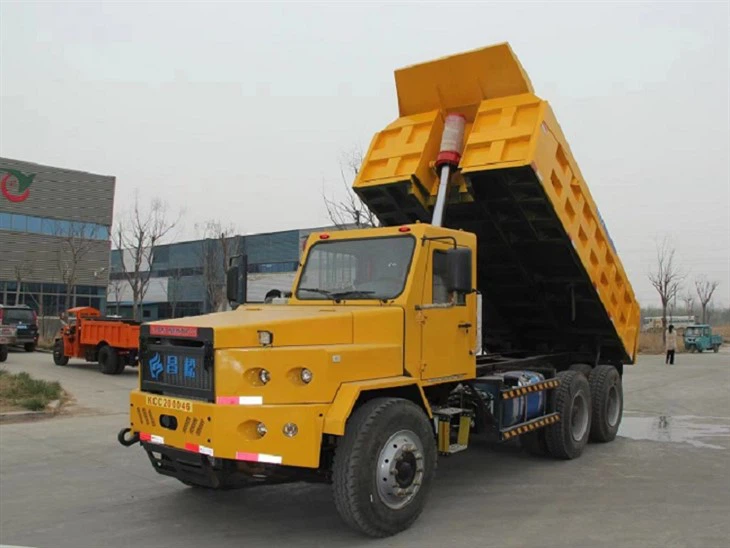
As a supplier of autonomous dump trucks, we offer a range of high - quality vehicles suitable for different urban construction needs. Our 12 Tons Mining Truck is a compact and versatile option, ideal for transporting smaller loads in tight urban spaces. It is equipped with state - of - the - art autonomous technology, ensuring safe and efficient operation.
For larger construction projects that require the transportation of heavier materials, our 25 Tons Mining Transport Truck is a powerful choice. It has a high payload capacity and advanced features that make it suitable for long - distance and high - volume material transportation.
In addition, our Mining Drive Vehicle is designed to handle the toughest terrains and working conditions. It can be customized to meet the specific requirements of urban construction projects, providing reliable performance in challenging environments.
Conclusion
The use of autonomous dump trucks in urban construction projects has both significant advantages and challenges. While the potential benefits in terms of safety, efficiency, cost - effectiveness, and environmental impact are substantial, the regulatory, technical, and public perception issues need to be addressed. As a supplier, we are committed to working with construction companies, regulatory bodies, and other stakeholders to overcome these challenges and promote the widespread adoption of autonomous dump trucks in urban construction.
If you are interested in learning more about our autonomous dump trucks or wish to discuss potential procurement for your urban construction projects, please feel free to contact us. We are eager to have in - depth discussions with you and provide customized solutions to meet your specific needs.
References
- Levinson, D. (2018). The Autonomous Vehicle Revolution: A Transportation and Land Use Perspective. Routledge.
- Nourbakhsh, I. R., & Jenkins, O. C. (2017). Robot Futures. MIT Press.
- Saxena, A., & Goel, N. (2019). Autonomous Vehicles: Technology, Policy, and Implications. Springer.