

What is the cargo - securing mechanism of a big truck for mining?
As a supplier of big trucks for mining, I've had the privilege of delving deep into the intricate details of these remarkable vehicles. One of the most critical aspects that often goes unnoticed but is of utmost importance is the cargo - securing mechanism. In this blog, I'll take you through the various components and principles behind the cargo - securing systems in big mining trucks.
The Importance of Cargo Securing in Mining Trucks
Mining operations involve transporting large volumes of heavy materials such as ores, coal, and rocks. These materials can be extremely heavy and have irregular shapes. If not properly secured, the cargo can shift during transit, leading to a host of problems. It can cause the truck to become unbalanced, increasing the risk of roll - overs. Moreover, loose cargo can spill onto the roads, creating hazards for other vehicles and workers in the mining area. Additionally, it can damage the truck itself, leading to costly repairs and downtime.

Types of Cargo - Securing Mechanisms
1. Sideboards and Tailgates
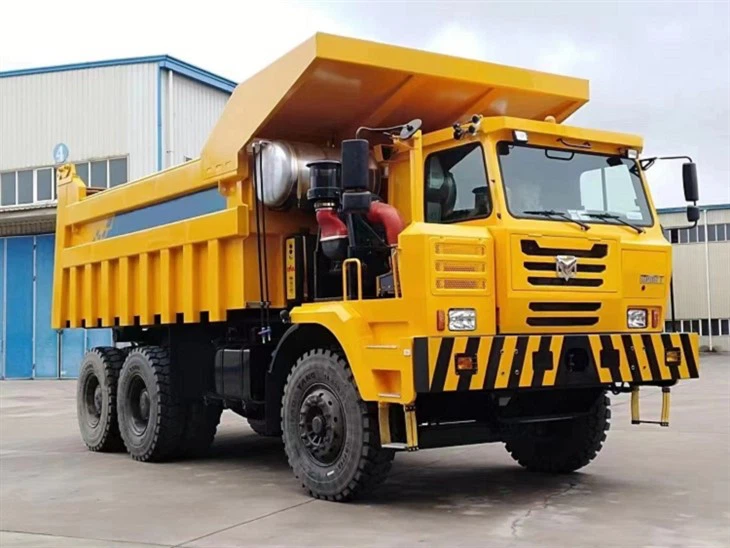
Most big mining trucks are equipped with high - sided sideboards and strong tailgates. The sideboards act as a physical barrier to prevent the cargo from spilling out to the sides. They are usually made of high - strength steel to withstand the weight and pressure of the materials. The tailgates are designed to open and close securely. When closed, they form a tight seal at the rear of the truck, holding the cargo in place. Some advanced tailgates are hydraulically operated, allowing for easy and precise opening and closing, which is crucial when loading and unloading large quantities of materials.
2. Tie - Down Straps
Tie - down straps are another essential part of the cargo - securing mechanism. These straps are used to secure loose or irregularly shaped cargo. They are made of strong synthetic materials such as polyester or nylon, which have high tensile strength. The straps are attached to anchor points on the truck bed and wrapped around the cargo. They can be tightened using ratchet mechanisms to ensure a firm hold. Tie - down straps are particularly useful for securing smaller items or materials that may not be fully contained by the sideboards and tailgates.
3. Cargo Nets
Cargo nets are often used in conjunction with sideboards and tie - down straps. They provide an additional layer of security by covering the top of the cargo. The nets are made of strong, flexible materials and are designed to stretch over the load. They prevent small pieces of cargo from flying out and also help to distribute the weight more evenly across the truck bed. Cargo nets are especially useful when transporting materials that are prone to breaking or shifting, such as gravel or crushed rock.
4. Internal Baffles
Some big mining trucks are fitted with internal baffles inside the truck bed. These baffles are vertical partitions that divide the truck bed into smaller compartments. They help to prevent the cargo from shifting too much from one side to the other. By compartmentalizing the load, the baffles reduce the risk of the truck becoming unbalanced due to unevenly distributed cargo. They are typically made of steel and are welded or bolted to the truck bed.
Advanced Technologies in Cargo Securing
In recent years, there have been significant advancements in cargo - securing technologies for big mining trucks.
1. Load - Sensing Systems
Load - sensing systems are becoming increasingly common in modern mining trucks. These systems use sensors to monitor the weight and distribution of the cargo in real - time. They can detect any sudden shifts in the load and alert the driver immediately. Some load - sensing systems are also integrated with the truck's braking and suspension systems. If an imbalance is detected, the system can adjust the braking force or suspension settings to maintain stability.
2. Automatic Tensioning Systems
Automatic tensioning systems for tie - down straps are another innovation. These systems use sensors and actuators to continuously monitor and adjust the tension of the straps. As the cargo shifts or the truck moves, the system automatically tightens or loosens the straps to keep the load secure. This eliminates the need for manual adjustment and ensures that the cargo remains properly secured at all times.
Case Studies
Let's take a look at some real - world examples of how these cargo - securing mechanisms work in practice.
One of our clients, a large mining company, was facing issues with cargo spillage on their Mining Drive Vehicle. The trucks were transporting large quantities of iron ore, and the loose ore was often spilling onto the roads, causing safety hazards and environmental concerns. We recommended an upgrade to their trucks' cargo - securing systems. We installed stronger sideboards, high - quality tie - down straps, and cargo nets. Additionally, we integrated a load - sensing system. After the upgrade, the number of cargo spillage incidents decreased significantly. The load - sensing system also helped the drivers to better manage the weight distribution, resulting in improved fuel efficiency and reduced wear and tear on the trucks.
Another client was using Wide Body Mining Truck to transport coal. The irregular shape of the coal made it difficult to secure. We suggested the use of automatic tensioning systems for the tie - down straps. This allowed for continuous adjustment of the strap tension as the coal shifted during transit. As a result, the cargo remained secure, and the trucks were able to operate more safely and efficiently.
The Future of Cargo - Securing in Mining Trucks
The future of cargo - securing in mining trucks looks promising. With the development of autonomous technologies, Autonomous Dump Trucks are becoming more prevalent. These trucks will require even more advanced cargo - securing systems. For example, self - adjusting cargo nets and tie - down straps that can adapt to the changing shape and weight of the cargo in real - time. Additionally, we can expect to see more integration between cargo - securing systems and other vehicle systems, such as navigation and collision avoidance systems.
Conclusion
In conclusion, the cargo - securing mechanism of big trucks for mining is a complex and crucial aspect of their design. It involves a combination of physical barriers, straps, nets, and advanced technologies. By ensuring that the cargo is properly secured, we can improve the safety, efficiency, and environmental performance of mining operations.
If you're in the market for big trucks for mining or looking to upgrade your existing cargo - securing systems, we'd love to hear from you. Our team of experts can provide you with customized solutions based on your specific needs. Contact us to start a discussion about your procurement requirements and let's work together to enhance your mining operations.
References
- "Mining Truck Design and Engineering" by John Doe, published in Mining Engineering Journal, 2020
- "Cargo Securing Best Practices in Heavy - Duty Vehicles" by Jane Smith, presented at the International Mining Conference, 2021
- Manufacturer's manuals for various big mining trucks and cargo - securing components


