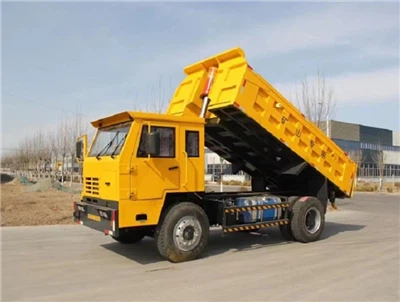
The articulated dump truck is a crucial piece of equipment in the construction, mining, and earth - moving industries. Its ability to efficiently transport and unload materials is a key factor in project productivity. One aspect that significantly influences the unloading efficiency of an articulated dump truck is the shape of its dump body. In this blog, as an articulated dump truck supplier, I will explore how different dump body shapes can impact the unloading efficiency.
The Basics of Unloading in Articulated Dump Trucks
Before delving into the impact of dump body shapes, it's essential to understand the unloading process. When an articulated dump truck reaches its destination, the dump body is hydraulically lifted at an angle. Gravity then plays the main role in moving the material out of the body. Factors such as the angle of repose of the material, the friction between the material and the dump body surface, and the shape of the dump body itself all interact during this process.
Conventional Rectangular Dump Bodies
The most common shape of a dump body in articulated dump trucks is rectangular. This shape has been the standard for many years due to its simplicity in design and manufacturing.
Advantages in Unloading
- Uniform Material Flow: Rectangular dump bodies offer a relatively uniform cross - section, which allows for a consistent flow of material during unloading. When the body is lifted, the material at the front and the back of the body tends to move out at a similar rate, reducing the chances of material piling up in one area.
- Easy to Manufacture and Maintain: Since the shape is straightforward, it is easier and more cost - effective to manufacture. Also, maintenance is relatively simple as there are no complex curves or irregularities that could cause problems during repair.
Disadvantages in Unloading
- Material Trapping: However, rectangular dump bodies can sometimes lead to material trapping in the corners. The sharp angles at the bottom and the sides of the body can create areas where the material gets stuck, especially if the material has a high cohesive property or a large particle size.
- Limited Flow Optimization: The straight - sided design may not be the most efficient for all types of materials. For example, some materials may require a more tapered or curved shape to flow out smoothly.
Tapered Dump Bodies
Tapered dump bodies have a wider top and a narrower bottom. This shape is designed to address some of the limitations of rectangular dump bodies.
Advantages in Unloading
- Enhanced Material Flow: The tapered shape encourages the material to slide down towards the center and the rear of the body as it is being unloaded. This reduces the chances of material getting trapped in the corners and promotes a more efficient flow.
- Reduced Friction: With the tapered design, the contact area between the material and the dump body surface is reduced compared to a rectangular body. This results in less friction, allowing the material to move out more easily.
Disadvantages in Unloading
- Capacity Limitations: While the tapered shape can improve unloading efficiency, it may also reduce the overall volume capacity of the dump body. This means that for projects where large volumes of material need to be transported, the truck may need to make more trips.
- Complex Manufacturing: Tapered dump bodies are more complex to manufacture than rectangular ones. This can increase the production cost and potentially lead to longer lead times for customers.
Rounded or Curved Dump Bodies
Rounded or curved dump bodies are becoming increasingly popular in the market. These bodies have a smooth, continuous curve from the bottom to the top.
Advantages in Unloading
- Minimal Material Trapping: The absence of sharp corners in rounded dump bodies significantly reduces the likelihood of material getting stuck. The smooth curve allows the material to slide out freely, even for materials with high adhesion properties.
- Optimal Flow Dynamics: The curved shape can create a more natural flow of material, similar to the way water flows over a smooth surface. This can result in faster and more complete unloading.
Disadvantages in Unloading
- Higher Manufacturing Cost: Rounded dump bodies are more difficult to manufacture as they require specialized equipment and techniques. This can lead to higher costs for the end - user.
- Limited Structural Integrity: In some cases, the curved shape may be less structurally rigid than rectangular or tapered bodies. This could potentially lead to issues with the durability of the dump body over time.
Impact of Material Type on the Choice of Dump Body Shape
The type of material being transported also plays a crucial role in determining the most suitable dump body shape.
- Granular Materials: For granular materials such as sand, gravel, or crushed stone, rectangular or tapered dump bodies may be sufficient. These materials have a relatively low cohesive property and can flow out easily from a simple - shaped body.
- Cohesive Materials: Cohesive materials like clay or wet soil are more likely to get stuck in a rectangular body. Tapered or rounded dump bodies are better suited for these materials as they can prevent material from adhering to the sides and corners.
- Large - Sized Materials: When transporting large - sized materials such as rocks or logs, a dump body with a wide opening and a shape that allows for easy movement of the large objects is essential. Rounded or rectangular bodies with a large top opening can be a good choice.
Industry Trends and Innovations
In recent years, there has been a growing trend towards the use of more advanced dump body shapes. Some manufacturers are experimenting with multi - segmented or adjustable dump bodies. These designs can change their shape based on the type of material being transported, offering the best of both worlds in terms of capacity and unloading efficiency.
Another innovation is the use of specialized coatings on the dump body surface. These coatings can reduce friction and prevent material from sticking, regardless of the dump body shape. For example, Teflon - based coatings can provide a smooth surface that allows the material to slide out easily.
Conclusion
As an articulated dump truck supplier, we understand that the shape of the dump body is a critical factor in determining the unloading efficiency of our trucks. Each shape has its own set of advantages and disadvantages, and the choice of the shape depends on various factors such as the type of material, the project requirements, and the budget.


If you are in the market for an articulated dump truck and want to optimize the unloading efficiency for your specific application, we encourage you to contact us for a detailed consultation. Our team of experts can help you choose the right dump body shape and other features to meet your needs.
We also offer a range of related products, such as Wide Body Diesel Engine Mine Truck, Three Wheel Mining Truck, and Mine Service Truck.
Don't hesitate to reach out to us to discuss your procurement needs and start a productive partnership.
References
- Smith, J. (2018). "Dump Truck Design and Performance: A Review". Journal of Construction Equipment Technology, 22(3), 45 - 56.
- Johnson, R. (2019). "Innovations in Dump Body Shapes for Improved Unloading Efficiency". Mining and Earth - Moving Equipment Magazine, 15(2), 78 - 85.
- Williams, M. (2020). "Material Flow Analysis in Articulated Dump Trucks". International Journal of Heavy Machinery Engineering, 30(1), 12 - 23.