Hey there! As a supplier of explosion-proof loaders, I often get asked about the fuel consumption of these bad boys. So, I thought I'd sit down and break it all down for you in this blog post.
First off, let's talk about what an explosion-proof loader is. These are specialized machines designed to operate in hazardous environments, like mines where there's a risk of explosions due to the presence of flammable gases or dust. They're built with all sorts of safety features to prevent any sparks or heat sources that could set off an explosion.
Now, onto the main question: what's the fuel consumption of an explosion-proof loader? Well, it's not a one-size-fits-all answer. There are several factors that can affect how much fuel an explosion-proof loader uses.
Factors Affecting Fuel Consumption
1. Engine Size and Type
The size and type of the engine play a huge role. Generally, larger engines consume more fuel. Explosion-proof loaders come with different engine sizes depending on their intended use and capacity. For example, a loader designed for heavy-duty mining operations might have a bigger engine compared to one used for lighter tasks. Diesel engines are commonly used in explosion-proof loaders because they're more efficient and can handle the tough conditions. But diesel engines also have different fuel consumption rates based on their design and technology. Newer engines with advanced fuel injection systems tend to be more fuel-efficient than older models.
2. Load and Workload
How much the loader is carrying and how hard it's working also impact fuel consumption. If you're constantly loading and moving heavy materials, the engine has to work harder, which means it'll burn more fuel. On the other hand, if the loader is only doing light tasks or is idle for long periods, the fuel consumption will be lower. For instance, if you're using the loader to move small amounts of coal around a mine, it won't use as much fuel as when you're hauling large boulders.
3. Operating Conditions
The environment in which the loader operates matters a lot. In mines, the terrain can be rough, with uneven surfaces and steep slopes. When the loader has to climb hills or navigate through difficult terrain, it uses more fuel. Also, extreme temperatures can affect fuel consumption. In cold weather, the engine takes longer to warm up, and it might use more fuel during the warm-up phase. In hot weather, the cooling system has to work harder, which can also increase fuel usage.
4. Operator Skills
Believe it or not, the person operating the loader can make a big difference in fuel consumption. A skilled operator knows how to handle the machine efficiently, using the right amount of throttle and avoiding unnecessary idling. They can also plan their routes and tasks in a way that minimizes the loader's movement and reduces fuel waste. On the other hand, an inexperienced operator might be more likely to rev the engine too much or leave the loader running when it's not needed, leading to higher fuel consumption.
Average Fuel Consumption Ranges
It's difficult to give an exact figure for the fuel consumption of an explosion-proof loader because of all these factors. But I can give you a general idea. For a medium-sized explosion-proof loader used in typical mining operations, the fuel consumption can range from 10 to 25 liters per hour. Smaller loaders might use around 5 to 10 liters per hour, while larger, heavy-duty ones could consume 25 liters or more per hour.

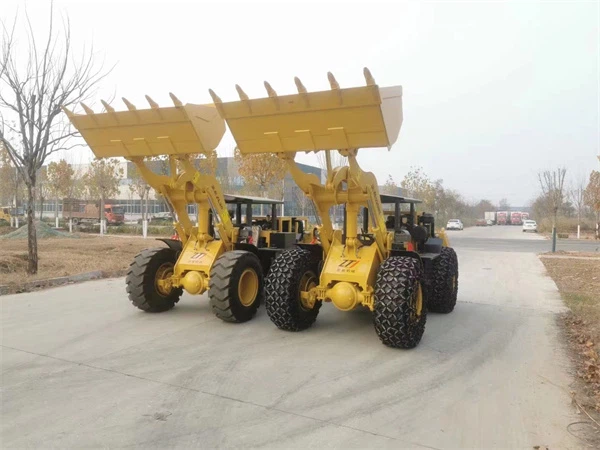
Keep in mind that these are just rough estimates. The actual fuel consumption can vary significantly based on the specific model of the loader, the factors I mentioned earlier, and how well the loader is maintained.
Tips to Reduce Fuel Consumption
If you're looking to cut down on fuel costs for your explosion-proof loader, here are some tips:
1. Proper Maintenance
Regular maintenance is key. Make sure the engine is tuned up, the air filters are clean, and the tires are properly inflated. A well-maintained loader runs more efficiently and uses less fuel. For example, a dirty air filter can restrict airflow to the engine, making it work harder and burn more fuel.
2. Efficient Operation
Train your operators to use the loader efficiently. Encourage them to avoid unnecessary idling, use the right gear for the task, and plan their movements to minimize back-and-forth driving. For instance, instead of making multiple short trips, they can try to load as much as possible in one go.
3. Optimize the Load
Don't overload the loader, but also make sure it's carrying a full load whenever possible. An underloaded loader is less efficient because the engine is still using fuel to move the machine, but it's not doing as much work.
Other Related Equipment
If you're in the mining industry, you might also be interested in other equipment like Coal Mining Wheel Loader, Mine Wide Body Vehicle, and Mining Dump Truck. These machines work together to make the mining process more efficient.
Contact Us for Purchase
If you're in the market for an explosion-proof loader or any of the related equipment I mentioned, we're here to help. We offer high-quality, reliable machines that are designed to meet the toughest mining requirements. Whether you're looking for a specific fuel-efficient model or need advice on choosing the right equipment for your operation, our team of experts is ready to assist you. Just reach out to us, and we can start the conversation about your needs and how we can provide the best solutions for you.
References
- "Mining Equipment Handbook" - A comprehensive guide on various mining equipment and their operation.
- Industry reports on explosion-proof loader technology and fuel efficiency.