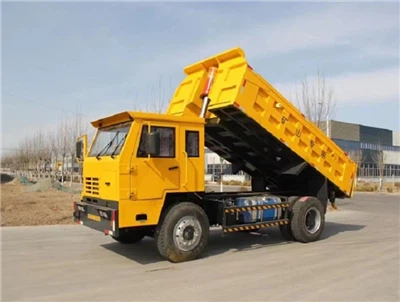
The steering mechanism of a big mining truck is a complex and crucial system that ensures the safety, efficiency, and maneuverability of these massive vehicles in harsh mining environments. As a leading supplier of big trucks for mining, we understand the importance of a well - designed steering mechanism and how it impacts the overall performance of the trucks.
Understanding the Basics of Steering Mechanisms
The primary function of a steering mechanism in any vehicle, including big mining trucks, is to control the direction of motion. It allows the driver to turn the vehicle left or right as needed to navigate the mining site. In the case of big mining trucks, which can carry up to hundreds of tons of ore or other materials, the steering system must be robust and reliable.


There are two main types of steering mechanisms commonly used in big mining trucks: hydraulic steering and electro - hydraulic steering.
Hydraulic Steering
Hydraulic steering is one of the most traditional and widely used steering systems in big mining trucks. It operates based on the principle of fluid pressure. A hydraulic pump, usually driven by the engine, generates pressure in the hydraulic fluid. When the driver turns the steering wheel, a control valve directs the pressurized fluid to one side or the other of a hydraulic cylinder. The movement of the piston in the hydraulic cylinder then transfers the force to the steering linkage, which turns the wheels.
The advantage of hydraulic steering is its high power - to - size ratio. It can generate a large amount of force with relatively compact components, which is essential for big mining trucks that need to turn heavy - duty wheels. Additionally, hydraulic systems are relatively simple in design and have been well - proven over time, making them reliable and easy to maintain.
However, hydraulic steering also has some limitations. The hydraulic fluid can leak over time, which may lead to a loss of steering performance. Also, the system's efficiency can be affected by temperature changes, as the viscosity of the hydraulic fluid varies with temperature.
Electro - Hydraulic Steering
Electro - hydraulic steering is a more advanced steering system that combines electrical and hydraulic components. In this system, sensors detect the position and movement of the steering wheel. The electrical signals from these sensors are then processed by an electronic control unit (ECU). The ECU sends commands to a solenoid - controlled valve, which regulates the flow of hydraulic fluid to the steering cylinder.
The main advantage of electro - hydraulic steering is its precision and flexibility. The ECU can adjust the steering response based on various factors such as the vehicle's speed, load, and steering angle. This means that the steering can be more responsive at low speeds for better maneuverability and less sensitive at high speeds for stability. Moreover, electro - hydraulic steering systems can be easily integrated with other vehicle control systems, such as anti - lock braking systems (ABS) and electronic stability control (ESC).
On the other hand, electro - hydraulic steering systems are more complex and expensive than traditional hydraulic steering systems. They also require more sophisticated diagnostic tools for maintenance and repair.
Components of a Big Mining Truck Steering Mechanism
Regardless of the type of steering system, a big mining truck steering mechanism consists of several key components.
Steering Wheel
The steering wheel is the interface between the driver and the steering system. It allows the driver to input the desired steering direction. In big mining trucks, the steering wheel is often larger and more ergonomically designed to accommodate the heavy steering forces and the driver's comfort during long - shift operations.
Steering Column
The steering column connects the steering wheel to the steering gearbox. It transfers the rotational motion from the steering wheel to the gearbox. The steering column may also contain components such as a universal joint, which allows for some flexibility in the steering system to account for the vehicle's suspension movement.
Steering Gearbox
The steering gearbox is responsible for converting the rotational motion from the steering column into linear motion to move the steering linkage. There are different types of steering gearboxes, such as recirculating ball and rack - and - pinion. Recirculating ball gearboxes are commonly used in big mining trucks due to their durability and ability to handle high loads.
Steering Linkage
The steering linkage consists of rods, arms, and joints that transfer the force from the steering gearbox to the wheels. It ensures that the wheels turn in the correct direction and at the appropriate angle. In big mining trucks, the steering linkage must be strong enough to withstand the heavy loads and the rough terrain of the mining site.
Hydraulic Components (for Hydraulic and Electro - Hydraulic Steering)
In hydraulic and electro - hydraulic steering systems, hydraulic components play a crucial role. These include the hydraulic pump, control valve, hydraulic cylinder, and hydraulic hoses. The hydraulic pump provides the power, the control valve directs the fluid flow, the hydraulic cylinder converts the fluid pressure into mechanical force, and the hoses transport the hydraulic fluid throughout the system.
Importance of a Well - Functioning Steering Mechanism in Mining Operations
A well - functioning steering mechanism is essential for the safety and efficiency of mining operations.
Safety
In a mining environment, big mining trucks often operate in narrow roads, steep slopes, and areas with limited visibility. A reliable steering system ensures that the driver can accurately control the vehicle's direction, reducing the risk of accidents such as collisions, roll - overs, and falls. For example, when a truck is descending a steep slope, the steering mechanism must be able to maintain the vehicle's stability and prevent it from veering off the road.
Efficiency
Efficient steering also improves the productivity of mining operations. A responsive steering system allows the driver to quickly maneuver the truck, reducing the time spent on turning and reversing. This can lead to more trips per shift and increased ore transportation volume. For instance, in a large - scale open - pit mine, a big mining truck with a smooth - operating steering mechanism can move more quickly between the loading and unloading points.
Our Products and Their Steering Mechanisms
As a supplier of big trucks for mining, we offer a wide range of vehicles with advanced steering mechanisms.
Our 12 Ton Mining Dump Truck is equipped with a high - performance hydraulic steering system. This system provides sufficient power to turn the wheels even when the truck is fully loaded. The hydraulic components are made of high - quality materials to ensure long - term reliability and minimal maintenance requirements.
The Mine Personnel Carrier uses an electro - hydraulic steering system. This allows for precise steering control, which is especially important when transporting personnel in the mining area. The system can adjust the steering response according to the vehicle's speed, providing a comfortable and safe ride for the passengers.
Our Underground Troop Carrier is designed to operate in the confined spaces of underground mines. The steering mechanism is optimized for high - maneuverability, allowing the vehicle to navigate through narrow tunnels with ease.
The 25 Tons Mining Transport Truck combines the robustness of hydraulic steering with the flexibility of electronic control. The electro - hydraulic steering system in this truck provides excellent steering performance under heavy loads and various operating conditions.
The Mechanical Transport Vehicle features a steering mechanism that is specifically designed for the mechanical transportation needs in the mining industry. It ensures reliable and precise steering, enabling the vehicle to carry out complex transportation tasks efficiently.
Conclusion
In conclusion, the steering mechanism of a big mining truck is a vital part of the vehicle's overall design. Whether it is a hydraulic or electro - hydraulic system, each type has its own advantages and is suitable for different mining applications. As a supplier of big trucks for mining, we are committed to providing high - quality vehicles with advanced steering mechanisms to ensure the safety and efficiency of mining operations.
If you are interested in our products or have any questions about the steering mechanisms of our big mining trucks, we welcome you to contact us for procurement and further discussions. We look forward to working with you to meet your mining transportation needs.