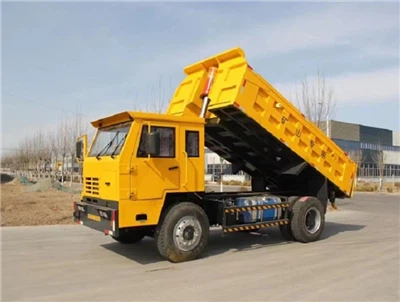
Vibration levels in underground haul trucks are a crucial aspect that directly impacts the vehicle's performance, the comfort of the operator, and the overall safety of mining operations. As a supplier of underground haul trucks, I've seen firsthand how these vibrations can vary and the importance of understanding them.
Let's start by talking about what causes these vibrations in the first place. One of the main factors is the terrain. Underground mines often have uneven, rocky, and bumpy floors. When the haul truck moves over these surfaces, it encounters constant jolts and shocks. These irregularities in the ground force the truck's wheels to move up and down rapidly, transferring the energy to the truck's chassis and causing vibrations.
Another significant cause is the truck's own mechanical components. The engine, transmission, and drivetrain are all sources of vibration. The engine, in particular, has pistons moving up and down at high speeds, creating a rhythmic vibration. If there are any issues with the engine's balance or if the components are worn out, these vibrations can become even more pronounced. The transmission also generates vibrations as it shifts gears, especially if the shifting is not smooth.
The load that the haul truck is carrying also plays a role. When the truck is fully loaded, the additional weight can change the way it interacts with the ground and its mechanical systems. A heavy load can put more stress on the suspension, causing it to work harder and potentially increasing vibrations. Moreover, an unevenly distributed load can lead to an imbalance in the truck, resulting in uneven vibrations.
Now, let's get into the different vibration levels that we typically see in underground haul trucks. There are two main types of vibrations: whole - body vibrations (WBV) and hand - arm vibrations (HAV).
Whole - body vibrations are felt throughout the operator's body. These vibrations can have a significant impact on the operator's health and well - being. Prolonged exposure to high levels of WBV can lead to various health problems, such as back pain, spinal disorders, and digestive issues. In underground haul trucks, WBV levels can range from low to high, depending on the factors I mentioned earlier.
On the low end of the scale, we might see vibrations in trucks that are operating on relatively smooth underground roads and are in good mechanical condition. These trucks typically have well - maintained suspensions that can absorb much of the shock from the road surface. The engine and transmission are also running smoothly, minimizing the internal sources of vibration. In such cases, the WBV levels might be just enough to give the operator a sense of the truck's movement but not enough to cause any discomfort or long - term health issues.
On the high end, when the truck is operating on extremely rough terrain, has a heavy and uneven load, or has mechanical problems, the WBV levels can be quite high. These high - level vibrations can make it difficult for the operator to control the truck properly. The constant jolting can cause fatigue quickly, and over time, it can lead to serious health problems.
Hand - arm vibrations, on the other hand, are mainly felt in the operator's hands and arms. These vibrations are usually caused by the steering wheel, controls, and other hand - held devices in the truck. High levels of HAV can lead to problems like vibration - induced white finger (VWF), a condition where the blood vessels in the fingers constrict, causing pain, numbness, and loss of dexterity.
In our experience as a supplier, we've found that different models of underground haul trucks have different vibration characteristics. For example, our 25 Tons Mining Transport Truck is designed to handle heavy loads while keeping the vibration levels as low as possible. It has a state - of - the - art suspension system that can adapt to different road conditions and loads. This helps to reduce both WBV and HAV levels, providing a more comfortable and safe operating environment for the operator.
Our 3 Wheel Electric Dump Truck is another great option. Since it's electric, it has fewer moving parts compared to traditional diesel - powered trucks. This means there are fewer sources of internal vibration. The electric motor runs smoothly, and the overall design of the truck is optimized to minimize vibrations. The three - wheel configuration also provides better stability, which can further reduce vibrations when the truck is in motion.
The Wide Body Mining Truck is built for large - scale mining operations. Its wide body design allows for a more even distribution of the load, which helps to reduce vibrations caused by an imbalanced load. Additionally, it has a robust suspension system that can handle the heavy loads and rough terrain commonly found in large mines.
To measure the vibration levels in our trucks, we use advanced vibration sensors. These sensors are placed at various points on the truck, such as the driver's seat, the steering wheel, and the chassis. They continuously monitor the vibrations and provide real - time data. This data allows us to analyze the vibration patterns and make adjustments to the truck's design or maintenance schedule as needed.
We also conduct extensive field tests in different underground mining environments. By testing our trucks in real - world conditions, we can get a better understanding of how they perform and how the vibration levels change depending on the specific mine conditions. This information is invaluable in improving the design and performance of our trucks.
If you're in the market for an underground haul truck, it's essential to consider the vibration levels. High - vibration trucks can lead to increased operator fatigue, higher maintenance costs, and potential safety risks. By choosing a truck with low vibration levels, you can improve the comfort and health of your operators, increase the lifespan of the truck, and enhance the overall efficiency of your mining operations.


If you're interested in learning more about our underground haul trucks and how we manage vibration levels, or if you're looking to make a purchase, we'd love to hear from you. Contact us to start a conversation about your specific needs and how our trucks can meet them. We're here to provide you with the best solutions for your mining transportation requirements.
References
- "Vibration in Mining Equipment: Causes, Effects, and Mitigation Strategies" - Mining Industry Journal
- "Health Effects of Whole - Body and Hand - Arm Vibrations in Heavy Equipment Operators" - Occupational Health Research Institute