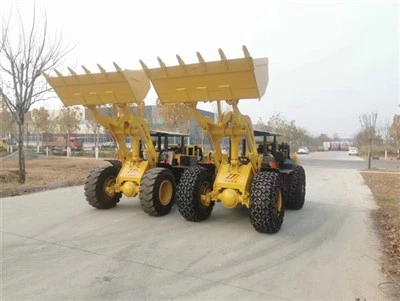
When it comes to the mining industry, the efficiency and performance of equipment are crucial factors that directly impact productivity and profitability. One such essential piece of equipment is the mining loader, which plays a vital role in the extraction and transportation of minerals from the mine to the surface. Among the many specifications that define the capabilities of a mining loader, the lifting height is a key parameter that deserves in - depth exploration.
Understanding the Concept of Lifting Height in a Mining Loader
The lifting height of a mining loader refers to the maximum vertical distance that the loader's bucket or attachment can reach from its lowest position. This measurement is of utmost importance as it determines the loader's ability to load materials into different types of haulage vehicles, dump into storage bins, or perform other tasks at various elevations within the mine.
In a typical underground mining scenario, the lifting height needs to be sufficient to transfer the mined materials into Mining Transport Vehicle. These vehicles come in different sizes and configurations, and the loader must be able to reach the appropriate height to efficiently load them. For example, larger transport vehicles may have higher loading points, requiring a mining loader with a greater lifting height.
Factors Affecting the Lifting Height
Several factors influence the lifting height of a mining loader. Firstly, the design and structure of the loader itself play a significant role. The length and configuration of the boom, which is the arm - like structure that holds the bucket, are critical. A longer boom generally allows for a greater lifting height, but it also affects the loader's stability and maneuverability. Manufacturers need to strike a balance between the length of the boom and the overall stability of the machine.
Secondly, the hydraulic system of the mining loader is another crucial factor. The hydraulic cylinders are responsible for extending and retracting the boom, and their power and stroke length determine how high the boom can be raised. A more powerful hydraulic system with longer - stroke cylinders can achieve a greater lifting height. However, this also requires a larger and more complex hydraulic pump and reservoir, which can add to the cost and weight of the loader.
The weight of the load being lifted also impacts the lifting height. As the weight of the material in the bucket increases, the loader's ability to lift it to a greater height decreases. This is because the hydraulic system has to work harder to overcome the gravitational force acting on the load. Therefore, when determining the required lifting height, it is essential to consider the typical weight of the loads that the loader will handle in the mining operation.
Importance of the Right Lifting Height in Mining Operations
Having the appropriate lifting height for a mining loader can significantly enhance the efficiency of mining operations. If the lifting height is too low, the loader may not be able to load materials into the haulage vehicles or storage bins effectively, leading to spillage and wasted time. This can result in reduced productivity and increased costs associated with cleaning up the spilled materials.


On the other hand, if the lifting height is excessive for the specific mining operation, it may lead to unnecessary complexity and cost in the design and manufacturing of the loader. A loader with an overly long boom may be less stable, increasing the risk of tipping over, especially on uneven or slippery mine floors.
In addition, the right lifting height can also improve safety in the mine. When the loader can load materials at the correct height, it reduces the need for workers to manually adjust the position of the load or use additional equipment to reach the loading point. This minimizes the risk of accidents and injuries in the workplace.
Applications of Different Lifting Heights
In small - scale mining operations, where the haulage vehicles are relatively small and the storage bins are at lower elevations, a mining loader with a moderate lifting height may be sufficient. These loaders are often more compact and maneuverable, making them suitable for tight spaces in the mine.
For large - scale open - pit and underground mines, where there are large - capacity Mining Transport Vehicle and high - level storage facilities, a mining loader with a greater lifting height is required. These loaders can quickly and efficiently transfer large volumes of materials, improving the overall throughput of the mining operation.
In some cases, mining operations may also involve the use of Trackless Personnel Carrier and Underground Mining Explosion - proof Vehicle. While the primary function of a mining loader is not directly related to these vehicles, having an appropriate lifting height can still contribute to the overall logistics and safety of the mine. For example, the loader may need to clear pathways or move materials to make way for these vehicles.
Selecting the Ideal Lifting Height for Your Mining Operation
As a mining loader supplier, we understand that choosing the right lifting height for your mining operation is a critical decision. It requires a comprehensive understanding of your specific mining requirements, including the type of minerals being extracted, the size and type of haulage vehicles, and the layout of the mine.
We offer a wide range of mining loaders with different lifting heights to meet the diverse needs of our customers. Our team of experts can work closely with you to assess your operation and recommend the most suitable loader based on your specific requirements. We consider factors such as the average load weight, the frequency of loading, and the available space in the mine to ensure that you get a loader that provides optimal performance and efficiency.
In addition to the lifting height, we also focus on other important aspects of the mining loader, such as its durability, reliability, and ease of maintenance. Our loaders are built with high - quality materials and advanced manufacturing techniques to withstand the harsh conditions of the mining environment. We also provide comprehensive after - sales support, including maintenance services and spare parts availability, to ensure that your loader operates at its best for years to come.
Conclusion
The lifting height of a mining loader is a crucial specification that has a significant impact on the efficiency, productivity, and safety of mining operations. By understanding the factors that affect the lifting height, the importance of choosing the right height, and the applications of different lifting heights, mining operators can make informed decisions when selecting a mining loader.
As a leading mining loader supplier, we are committed to providing our customers with high - quality loaders that meet their specific needs. Whether you are operating a small - scale mine or a large - scale industrial operation, we have the expertise and products to help you achieve your mining goals. If you are interested in learning more about our mining loaders or need assistance in selecting the right equipment for your operation, please do not hesitate to contact us for a detailed discussion and procurement negotiation.
References
- Smith, J. (2018). Mining Equipment Handbook. Mining Press.
- Johnson, A. (2019). Efficiency in Mining Operations. Journal of Mining Science.
- Brown, R. (2020). Safety Considerations in Mining Equipment Design. International Journal of Mining Safety.