In the dynamic landscape of the mining and construction industries, small mucking operations have emerged as a niche yet vital segment. As a dedicated supplier in the small mucking domain, I've witnessed firsthand the evolving job opportunities that this sector presents. This blog aims to explore the diverse range of career paths within small mucking, shedding light on the skills required, the potential for growth, and the unique challenges and rewards associated with each role.
Operator Positions
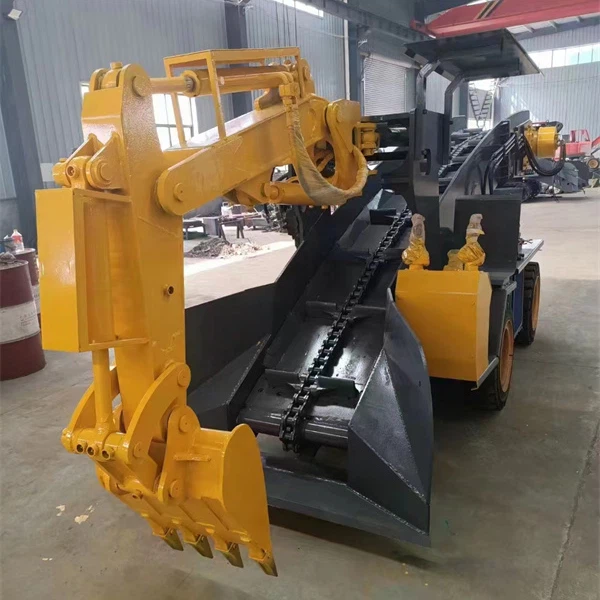
One of the most prominent job opportunities in small mucking is that of a mucking loader operator. These professionals are responsible for operating specialized equipment, such as the 80 Mucking Loader and the Small Mucking Loader for Mining, to move and transport materials within mining sites or construction projects.
To become a mucking loader operator, individuals typically need to have a high school diploma or equivalent. They must also undergo comprehensive training on the specific equipment they will be operating. This training covers safety procedures, equipment maintenance, and proper operating techniques. Operators need to have excellent hand - eye coordination, spatial awareness, and the ability to work in confined and often challenging environments.
The demand for skilled mucking loader operators is high, especially in regions with active mining and construction activities. These operators can expect to work in shifts, including evenings, weekends, and holidays. However, the job offers competitive salaries, and with experience, operators can advance to supervisory roles or become trainers for new operators.
Maintenance and Repair Technicians
Another crucial aspect of small mucking operations is equipment maintenance and repair. Maintenance and repair technicians play a vital role in ensuring that mucking loaders and other related equipment are in optimal working condition. They are responsible for conducting regular inspections, performing preventive maintenance, and troubleshooting and fixing any mechanical or electrical issues that may arise.
To pursue a career as a maintenance and repair technician in small mucking, individuals usually need to have a background in mechanical or electrical engineering, or a related field. Technical certifications, such as those in heavy equipment maintenance, are highly beneficial. Technicians need to be proficient in using a variety of tools and diagnostic equipment, and they must have a strong understanding of hydraulic, electrical, and mechanical systems.
The work of maintenance and repair technicians is often physically demanding and may require working in dirty and noisy environments. However, it offers a high level of job security, as well - maintained equipment is essential for the smooth operation of small mucking projects. Technicians may also have the opportunity to work on different types of equipment, including the Cold Milling Machine PM200, which can expand their skill set and increase their marketability.
Project Managers
Project managers are responsible for overseeing the entire small mucking project from start to finish. They are in charge of planning, coordinating, and controlling all aspects of the project, including budgeting, scheduling, resource allocation, and quality control. Project managers need to have strong leadership skills, excellent communication abilities, and a deep understanding of the small mucking industry.
A bachelor's degree in engineering, construction management, or a related field is typically required for a project management position. In addition, relevant work experience in small mucking or a related industry is highly desirable. Project managers need to be able to make quick decisions, solve problems effectively, and manage multiple tasks simultaneously.
The role of a project manager in small mucking is challenging but rewarding. They have the opportunity to work on large - scale projects, interact with different stakeholders, and contribute to the success of the project. With experience, project managers can advance to higher - level management positions within the company or start their own consulting firms.
Safety Specialists
Safety is of utmost importance in small mucking operations. Safety specialists are responsible for developing and implementing safety programs, conducting safety training for employees, and ensuring that all safety regulations and standards are met. They need to have a thorough understanding of occupational health and safety laws and regulations, as well as the specific risks associated with small mucking activities.

To become a safety specialist, individuals usually need to have a degree in occupational health and safety, environmental science, or a related field. Professional certifications, such as the Certified Safety Professional (CSP) designation, are highly regarded in the industry. Safety specialists need to be detail - oriented, have excellent communication skills, and be able to identify and mitigate potential safety hazards.
The work of safety specialists is crucial in preventing accidents and injuries in small mucking operations. They play a key role in creating a safe working environment for all employees, which can improve productivity and reduce costs associated with workplace accidents. Safety specialists may also have the opportunity to work on research projects related to safety in the small mucking industry.
Geologists and Mining Engineers
Geologists and mining engineers are involved in the exploration and planning phases of small mucking projects. Geologists study the geological characteristics of an area to identify potential mineral deposits and assess their viability for mining. They collect and analyze rock samples, conduct surveys, and use advanced mapping techniques to determine the location and quality of minerals.
Mining engineers, on the other hand, are responsible for designing and planning the mining operations. They develop mine layouts, determine the most efficient methods of extraction, and ensure that the mining process is safe and environmentally sustainable. Geologists and mining engineers need to have a strong background in geology, mining engineering, or a related field, and they typically hold a bachelor's or master's degree.
These professionals work in a variety of settings, including offices, laboratories, and mining sites. They need to have strong analytical skills, problem - solving abilities, and the ability to work well in teams. The demand for geologists and mining engineers in small mucking is expected to grow as the industry continues to expand and explore new areas for mineral extraction.
Administrative and Support Staff
In addition to the technical and operational roles, small mucking operations also require administrative and support staff. This includes positions such as office managers, human resources specialists, accountants, and logistics coordinators.
Office managers are responsible for managing the day - to - day operations of the office, including scheduling meetings, handling correspondence, and managing office supplies. Human resources specialists handle employee recruitment, training, and benefits administration. Accountants are in charge of financial record - keeping, budgeting, and financial reporting. Logistics coordinators are responsible for coordinating the transportation and delivery of equipment, materials, and supplies.
To work in administrative and support roles in small mucking, individuals usually need to have a background in business administration, human resources, accounting, or a related field. Strong organizational skills, attention to detail, and good communication skills are essential for these positions. These roles provide a stable work environment and the opportunity to support the overall success of small mucking operations.
Future Outlook and Growth Potential
The future of job opportunities in small mucking looks promising. With the increasing demand for minerals and the growth of the construction industry, the need for small mucking operations is expected to continue to rise. Technological advancements, such as the development of more efficient and environmentally friendly mucking equipment, are also likely to create new job opportunities in areas such as equipment design, automation, and data analytics.
Moreover, as the industry becomes more focused on sustainability, there will be a growing need for professionals who can develop and implement environmentally friendly practices in small mucking operations. This includes experts in waste management, water conservation, and energy efficiency.
Conclusion
In conclusion, the small mucking industry offers a wide range of job opportunities across various disciplines. Whether you are interested in operating heavy equipment, maintaining and repairing machinery, managing projects, ensuring safety, conducting geological research, or providing administrative support, there is a role for you in this dynamic and growing industry.
If you are interested in exploring job opportunities in small mucking or if you are looking for high - quality small mucking equipment, we invite you to contact us for a detailed discussion. Our team of experts is ready to assist you with your specific needs and requirements.
References
- "Mining Industry Outlook 2024", Industry Research Report, Mining Association of America.
- "Heavy Equipment Maintenance and Repair: A Comprehensive Guide", Smith, John, 2023.
- "Safety Standards in Small Mucking Operations", Occupational Safety and Health Administration, 2022.